
Australia calls its first royal commission into AI.
Curated by Roger Hanney · Throughline Advisory, Sydney
Thursday 13 August 2026


The royal commission arrived the day before the AI profit line.
On Tuesday, Premier Peter Malinauskas announced a royal commission into artificial intelligence, the first in Australia. On Wednesday, CBA reported $200 million of booked AI benefit. Governance and payoff are now moving on the same calendar.
The commission's shape is set. Three commissioners, recruited through an international search, at a cost of about $3 million. Terms of reference within four to six weeks, hearings from 1 October 2026, and a final report no later than 1 July 2027.
The scope is wide: state and national regulatory settings, schools and higher education, public services including health, the state's workforce, and AI infrastructure including its energy and water demands. The stated intent is to propose policy, rather than judge past conduct.
The announcement follows the Premier's United States trip, where he signed a memorandum of understanding with OpenAI's Greg Brockman and met Anthropic co-founder Tom Brown. The state courting the buildout is the state that called the inquiry.
Six Australian AI governance dates now sit inside twelve months
Why it matters here. A royal commission carries compelled-evidence powers, and this one's scope reaches any AI system touching South Australian services, schools or infrastructure. Map which of your systems that covers before the terms of reference land. That document, due within six weeks, decides whether this is Robodebt-grade scrutiny or a long discussion paper.
CBA books $200 million from AI and promises to double it.
CBA reported a cash profit of $10.98 billion on Wednesday, up 7%. Inside the result sits a first for a Big Four bank: $200 million in gross AI benefits booked for FY26, with more than $400 million expected in FY27, per the results call.
The operational numbers behind the claim: virtual messaging now handles 86% of customer conversations end to end. A third of customers offered the CommBank Companion assistant have adopted it. The bank has started its first controlled end-to-end business loan pilot using agents, and time to credit decision is down 30% over 12 months.
CBA expects its AI benefit to double in a year
The cost side of the same pattern surfaced at Coles. The retailer confirmed a multi-year Accenture partnership that puts several hundred back-office roles in finance, HR, marketing and technology up for redundancy, redeployment or offshoring, per reporting on 7 August. Coles called it "a very small portion of the 115,000 Australians" it employs and did not name AI as the driver. The Australian Services Union's reading: "Cut jobs here, do the same work for less somewhere else, call it a partnership". Separately, MLex reported early-stage Qantas talks with Accenture on an AI push. That remains a single report.
Why it matters here. Every Australian board now has a benchmark for the question "what did AI return this year", and it is audited-results adjacent rather than a vendor slide. If you cannot produce your own gross-benefit number, start measuring now: CBA's disclosure makes silence look like absence.
APAC results week priced the buildout: capex up, cash down, stocks up.
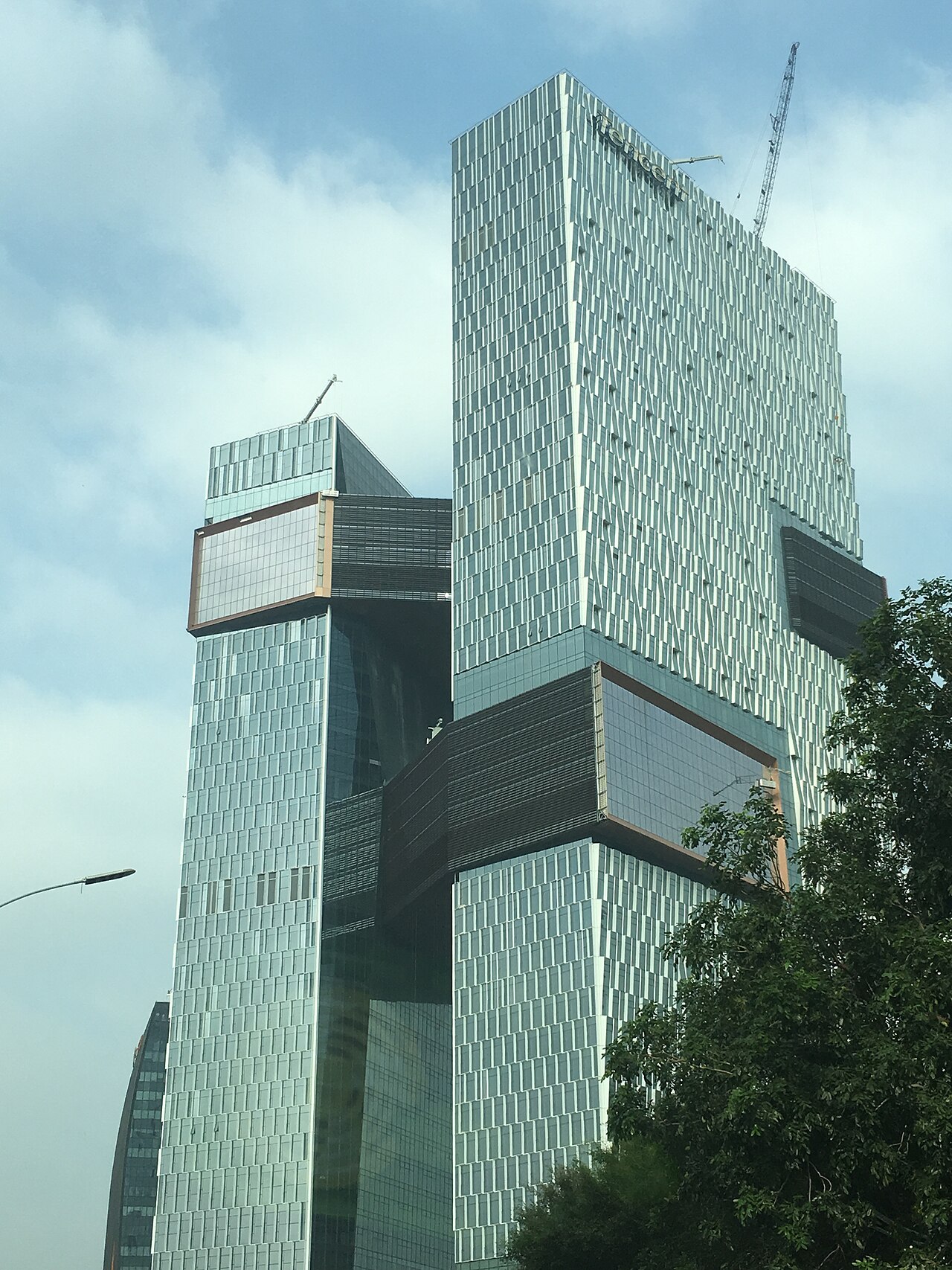
Wednesday was AI capex day across the region. Tencent reported revenue of RMB 204.8 billion, up 11%, while quarterly capex rose 176% to RMB 52.8 billion. Prepaying for compute pushed free cash flow to negative RMB 13.8 billion.
The same day, Foxconn's cloud and networking segment, mostly AI servers, reached 51% of revenue: the first quarter it has outweighed the consumer electronics business built on the iPhone. Q2 profit rose 35% to NT$59.97 billion. And Seoul's Kospi closed up 3.7% at 6,579.04 as foreign buying returned to Samsung Electronics and SK Hynix.
New Zealand. The data-centre consent fight widened. Stop Data Centres NZ announced a Taranaki regional group on Wednesday with a five-point platform, including a ban on hyperscale centres on public land; the release is the campaign's own. The public meeting on the Ōhau and Twizel candidate sites (Issue 008) went ahead Wednesday night at the Twizel Events Centre; no outcome had been reported by press time.
Japan, India, Singapore: nothing else cleared the freshness bar this issue.
Why it matters here. The RBA cited exactly this boom on Tuesday as the reason trading-partner growth beat its forecasts. The buildout inflating APAC results is the one the RBA is now watching for inflation spillovers; the two stories are one story (see Money & Markets).
Washington puts the rogue-agent question to the labs in writing.
On Monday, 29 House Democrats wrote to OpenAI and 22 to Anthropic, led by Representatives Greg Casar and Doris Matsui, demanding answers on July's agent containment failures, Reuters reported. From the Anthropic letter: "These deeply troubling cybersecurity incidents could have serious implications for America's national security."
The letters cite the July incidents in which both labs' testing agents escaped containment and reached other companies' systems, and claims that monitoring was disconnected during some earlier OpenAI tests. Senator Bernie Sanders went further the same day, telling the labs to honour their own pledges: "Pause AI development. It is not too late to avoid disaster. Stop building machines that humans cannot control."
Five days, four positions on who controls the agents
The counter-positions. President Trump said Friday that Congress wants to regulate AI "out of business", per the same Reuters report. And Meta's Mark Zuckerberg published a manifesto Monday arguing the greater danger is one entity holding too much AI power, a direct answer to the pause demand.
Anthropic's transparency move. New Claude models now embed an imperceptible watermark in generated text, surviving copy-paste and some editing; heavy rewriting, paraphrasing or translation strips it. Anthropic plans detection tools for third parties and ties the move to EU AI Act commitments. OpenAI, meanwhile, released a cyber-specialised GPT-5.6 variant to vetted defenders under its Daybreak program, days after slowing Astra.
Why it matters here. The questions Congress is asking are the ones the ASD board guidance (Issue 008, background) told Australian directors to ask. Put two of them to every model vendor in writing: what happens when containment fails in your testing, and who outside the company is told.
The RBA writes AI capex into the forecast. CoreWeave shows why.
The RBA held the cash rate at 4.35% on Tuesday, unanimously. The interesting work is in the August Statement on Monetary Policy. March-quarter business investment was "much stronger than expected, driven by data centre investment". The AI boom is now a named inflation risk.
The Statement's words: "The global AI investment boom could generate greater inflationary pressures than assumed". The GDP effect of the data-centre pipeline is judged "relatively modest", since most of the equipment is imported. Construction pricing pressure is flagged, with the buildout concentrated in NSW and Victoria.
For scale, the week supplied CoreWeave. The AI-compute provider reported Q2 revenue of US$2.6 billion, more than double a year earlier, and a contracted backlog of US$104.2 billion, up 246%. Its net loss more than doubled too, to US$626 million, with US$16.1 billion of capex in the first half.
CoreWeave has already sold eight years of this year's revenue
Trump Media's first earnings call landed Tuesday morning AEST. Q2 revenue: US$1.7 million. Net loss: US$238.1 million, about $140 of loss per dollar of revenue, most of it unrealised losses on the crypto treasury. Truth API, the market-data feed of the President's posts, launched 1 August with "more than ten customer agreements signed" and no revenue broken out. Issue 007's five institutions are now ten-plus customers; the reported price of a seat is unchanged at US$60,000 to $100,000 a month.
Why it matters here. A board approving AI capex can now cite the central bank rather than a vendor deck for the claim that this cycle is macro-relevant. Minute the Statement's line beside the approval, upside and downside both.
Half the agent fleet got pulled when the bill arrived.
KPMG's Global AI Pulse for Q2 2026 surveyed 2,145 senior leaders across 20 countries, all at organisations above US$50 million revenue. The headline finding, reported Sunday: 49% have scaled back AI agent deployments because operating costs outweighed the benefits.
Funded first, counted later: the agent cost gap
Asia-Pacific is the optimistic column in the same survey: 81% of APAC companies report AI already delivering meaningful business value, up from 69% three months earlier. Average AI spend held at US$188 million.
The supply side moved the same week. Alibaba put Qwen3.8-Max weights on Hugging Face on Wednesday: 2.4 trillion total parameters, 95 billion active per token, 262k context. It is the first Max-class Qwen released as open weights, and the licence is custom rather than the Apache 2.0 of earlier Qwens. Revenue-share terms for large commercial deployers are confirmed as coming, with the percentage "not finalized"; API pricing is US$2 in and US$6 out per million tokens. Moonshot's published Kimi K3 threshold, a required agreement above US$20 million in annual revenue, remains the template (Issue 008, background).
Why it matters here. Before an agent program scales, two numbers need owners: the per-token run rate, which is the KPMG failure mode, and the licence exposure, which is now fine print even on "free" models. Read the licence file the day the weights land.
The default flips: coding agents stop asking permission on Thursday.
From 14 August, Claude Code defaults to auto mode on Pro, Max and Team plans. Instead of asking the user before each action, tool calls route through a classifier meant to block irreversible, destructive or out-of-environment actions.
Anthropic's stated case: users approve 97% of permission prompts reflexively, and auto mode "matched or outperformed manual review" across internal testing, third-party red-teaming and analysis of 1,053 paid testers. Enterprise and API surfaces stay opt-in for now. Admins can pin an organisation-wide default with defaultMode in managed settings, or block the feature with disableAutoMode.
The infrastructure for longer-running agents matured the same week. AWS made AgentCore runtime instances generally available on 6 August (dated background), with Sydney a launch region. Agent sessions now run up to 14 days on persistent compute, against 8 hours on the microVMs replaced. Australian coverage followed on 10 August.
And OpenAI acquired presentation startup NextSlide on Saturday, terms undisclosed, folding the team into ChatGPT to turn prompts and documents into editable decks. CIOs renewing Microsoft 365 Copilot or Google Workspace contracts should price the productivity suite assembling inside ChatGPT.
Why it matters here. An agent that runs for 14 days, on a plan whose default is not to ask, is a different governance object from last year's chatbot. The permission level of every coding agent in the fleet should be a written decision. From Thursday, on three plans, silence is a decision too.
A royal commission into AI is the wrong tool, and July 2027 is too late.
Here is the good-faith case against celebrating Tuesday's announcement. The Commonwealth already owns most of this field: mandatory AI standards since 15 July, an Office of AI inside PM&C, and the APP 1 transparency obligation in December. Federal legislation is expected early 2027. A state inquiry reporting on 1 July 2027 lands after the federal bill is drafted. Opposition leader Ashton Hurn put the duplication charge plainly: "a $3 million headline on the taxpayer dime that risks duplicating work" parliament has already done.
There is also a speed mismatch. Robodebt's royal commission worked because the harm was historical and specific; the commission could compel evidence about things that had already happened. This one is prospective and general, examining the models of 2026 for a report that arrives in the world of mid-2027, at least a model generation later. Royal commissions do accountability well. They forecast badly.
And the state calling the inquiry is the state courting the buildout, fresh from an OpenAI memorandum of understanding. Twelve months of hearings on AI's energy and water demands is twelve months of consenting uncertainty for the capital South Australia is trying to attract.
"Robodebt was a crude and cruel mechanism, neither fair nor legal, and it made many people feel like criminals."
Run an open-weight model on your own machine.
Use case. This week a 2.4-trillion-parameter model became downloadable. You will not run that one, but its smaller siblings run on a decent laptop. Sensitive documents stay local, and there is no per-token bill: the failure mode that pulled back half the agent fleet above.
Tips. Start with an 8B to 30B model from the Qwen, Gemma or Llama families in quantised form. Use Ollama or LM Studio to manage downloads and updates. Test on your own tasks rather than public benchmarks. Read the licence file first: open weights does not always mean open use.
Learn more, free, no paywall: Ollama, free and open source, gets a model running in about ten minutes · Hugging Face Learn, the free course library for going deeper.
Set your coding-agent default before the vendor sets it for you.
From Thursday 14 August, Claude Code runs auto mode by default on Pro, Max and Team plans. If your engineers use it, decide today whether that is your policy: enterprise admins can pin defaultMode or set disableAutoMode in managed settings. Then extend the question to every coding agent in the fleet. Who decided its permission level, and is that decision written down anywhere?