Telstra and Airservices both moved to put every AI request through one door.
Curated by Roger Hanney · Throughline Advisory · Sydney · Edition of Thursday 3 September 2026, covering 31 August to 3 September
Published 22 September 2026
Telstra stopped letting AI run loose. Airservices never intends to start.
One is a listed telco with hundreds of use cases in production. The other is a government safety body at the start of adoption. Both chose a single point of control.
Telstra is Australia's largest telecommunications company. It has said it wants to be an AI-first enterprise and has identified 380 AI use cases. On 31 August iTnews reported that it has deployed an "AI control plane": a real-time monitoring layer for AI performance, risk and cost across the whole company. Telstra first mentioned the tool at its annual results in August. It declined to describe the technology underneath.
Chris Ellis, Telstra's head of corporate software engineering, gave the reason. He said the challenge is no longer managing individual deployments but governing an enterprise-wide AI ecosystem. At an SAP event in Sydney he was blunter. He said Telstra can no longer put AI out in the wild and let the organisation experiment, and that letting teams discover their own next adventure is missed opportunity. Michael Ackland, the chief financial officer, has separately warned that software licences and cloud spend on AI could eat into the productivity benefits.
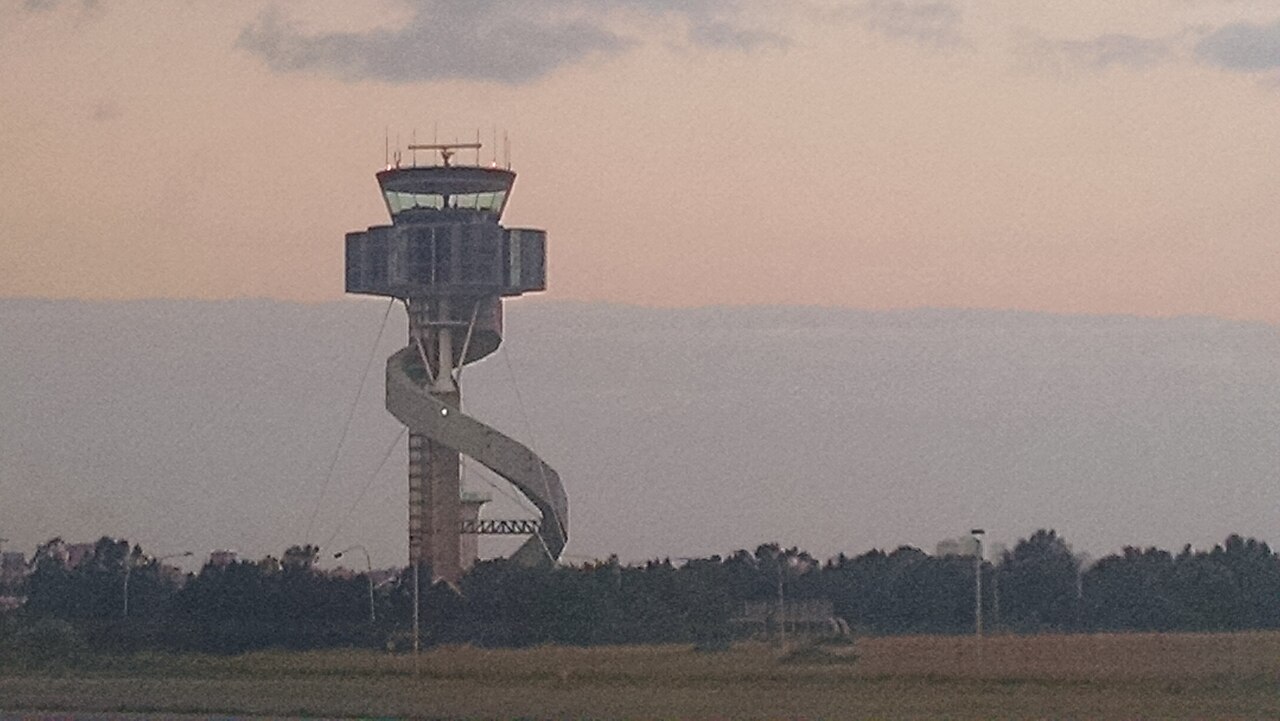
Airservices Australia is the government-owned body that runs air traffic control. On 3 September iTnews reported its request for information for an "AI broker". Airservices wants to stop what it calls the proliferation of unmanaged point solutions. The broker would be the organisation's single AI front door. It would route each request to the most suitable model, connect to corporate systems through governed connectors, and show administrators usage, cost, behaviour and compliance.
The specification is unusually precise for a request for information. Hosting in AWS Sydney, inside Airservices-controlled accounts. Amazon Bedrock as the primary model gateway. A latency target on time to first token. And every AI interaction, tool invocation and administrative action logged to an immutable audit trail kept for at least seven years. About 100 users would trial it before a rollout to more than 3,000.
The pattern is the point. Telstra built central control after sprawl. Airservices is specifying it before sprawl. Either way, the organisation ends up with one place where cost, model choice and audit live together.
Sources: iTnews, 31 Aug 2026 and iTnews, 3 Sep 2026.
Two organisations, two starting points, one architecture.
| Telstra | Airservices Australia | |
|---|---|---|
| Where it is in adoption | 380 use cases identified, many in production | Early; wants to stop point solutions multiplying |
| What it calls the layer | AI control plane | AI broker, or AI front door |
| What it watches | Performance, risk and cost, in real time | Usage, cost, behaviour and compliance |
| Model choice | Not disclosed | Routes each request to the most suitable model |
| Audit | Not disclosed | Immutable logs, kept seven years minimum |
| Hosting | Not disclosed | AWS Sydney, Amazon Bedrock as gateway |
| Who is worried about cost | The chief financial officer, on the record | Written into the requirements |
The automated-decision disclosure in the Privacy Act starts on 10 December. It asks what personal information your AI uses and what decisions it touches. A single control layer is the only place that answer already exists. Organisations without one will be assembling it by hand.
Anthropic bought six years of Texas compute through a chain with Nvidia at three links.
The deal is large. The structure is the more useful thing to understand.
On 31 August Reuters confirmed a report by the Wall Street Journal that Anthropic has signed a US$35 billion cloud computing agreement with Lambda. Lambda is a cloud provider based in San Jose, California. Nvidia is one of its investors. The capacity, about 350 megawatts, comes from a data centre under construction in Nueces County, Texas, developed by Hut 8, a company that moved from bitcoin mining into data centres. AFP reported the term as six years.
The Next Web traced the chain. Nvidia leases the facility from Hut 8. Lambda pays Nvidia for access and installs Nvidia chips. Lambda then sells the computing capacity to Anthropic. Nvidia appears as investor, as landlord and as supplier in a transaction it is not formally party to. Neither Anthropic nor Lambda announced the deal, and the reporting rests on unnamed sources.
The same outlet notes this follows a US$45 billion, six-year agreement between Anthropic and Nscale for capacity in West Virginia, signed earlier in August. For an Australian reader the relevance is the 1.4 gigawatts Anthropic is reported to want here. Deals of this shape are what a local data centre approval would be feeding.
Sources: Reuters via The Star, 1 Sep 2026 and The Next Web, Sep 2026.
Apple changed chief executives and moved Cook to the policy job.
John Ternus became Apple's chief executive on 1 September. Apple announced the succession in April. Ternus joined Apple in 2001 and ran hardware engineering across iPhone, Mac, iPad and Apple Watch. Tim Cook, chief executive since 2011, became executive chairman. Apple said Cook will assist with certain aspects of the company, including engaging with policymakers around the world. Arthur Levinson moved from non-executive chairman to lead independent director.
The policy role was not decorative. On 19 September, in his new capacity, Cook hosted Australia's Prime Minister at Apple Park to discuss child safety controls and AI standards. Issue 020 covers that meeting.
Source: PocketGamer.biz, reporting Apple's announcement, Apr 2026.
Central control is how large organisations kill the only AI that was working.
The lead reads two control layers as maturity. The counter-case reads them as the immune response of a bureaucracy. The AI that delivered value inside Telstra in 2025 and 2026 was built by teams who found a tool, tried it and kept what worked. A control plane turns each of those decisions into a request to a central team with a cost dashboard. The 380 use cases will become 40 approved ones. The CFO will get his discipline. The productivity he was worried about losing to licence fees will be lost to the queue instead.
Airservices is the stronger case for control, because it is a safety organisation with a legal duty to keep records. Telstra is not. A telco competing on service should be wary of copying a regulator's architecture.
"When you can measure what you are speaking about, and express it in numbers, you know something about it; but when you cannot measure it, when you cannot express it in numbers, your knowledge is of a meagre and unsatisfactory kind."
Write the one-page requirements for your own AI front door before a vendor writes them for you.
Use case. Anyone responsible for technology, risk or finance in an organisation where staff already use several AI tools. Airservices published a workable list in its request for information. Borrow the headings: which models staff may reach, where the data is hosted, what gets logged and for how long, who sees cost by team, and how fast a response must start. Fill them in for your organisation. It takes an afternoon and needs no vendor.
Tips. Start with what you already have: an identity provider, a cloud account, a finance code per team. A front door is mostly plumbing between those three. Decide the logging retention first, because it drives storage cost and privacy obligations. Keep the trial small and measured, as Airservices did with 100 users.
Learn more, free, no paywall: the iTnews summary of the Airservices requirements for a real example, and the OAIC's privacy guidance for organisations for what the logs need to support.
Count the AI tools your organisation pays for this month.
Pull the last three months of card and invoice data and search for AI vendors. Most organisations find between three and ten they did not know about. Put the list beside the question Telstra's CFO asked: is the cost eating the benefit? That list is the first page of a control plane, and it costs nothing to make. Turning it into a governed design is the engagement Throughline Advisory runs: throughlineadvisory.au.