The $150 billion buildout gets its rulebook.
Curated by Roger Hanney · Throughline Advisory, Sydney
Friday 7 August 2026




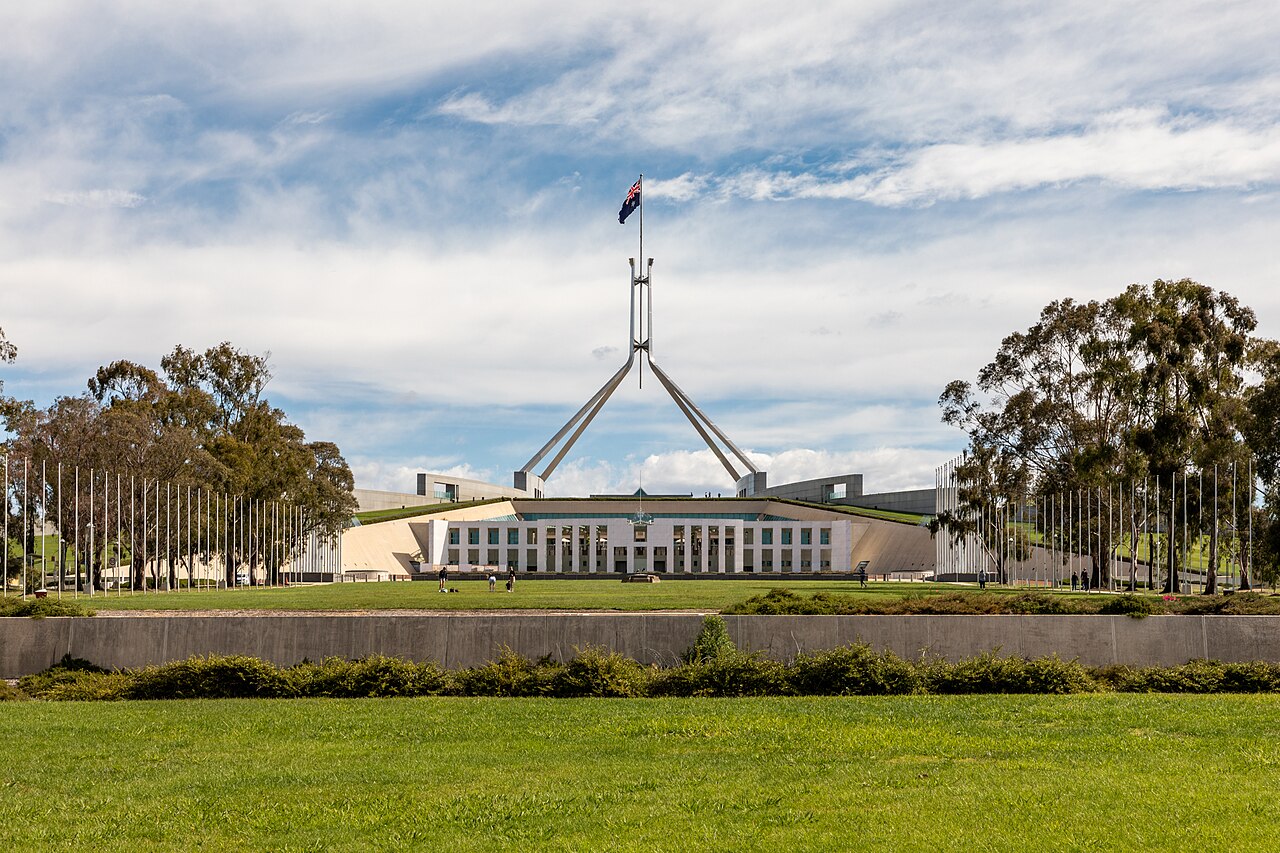
Canberra to the states: add to the AI rules. You can't subtract.
Chris Bowen used a National Press Club address on Tuesday to confirm National Cabinet will consider the mandatory AI standards this month — and to tell dissenting states they "will be free to add more rigorous requirements, but not to water them down."
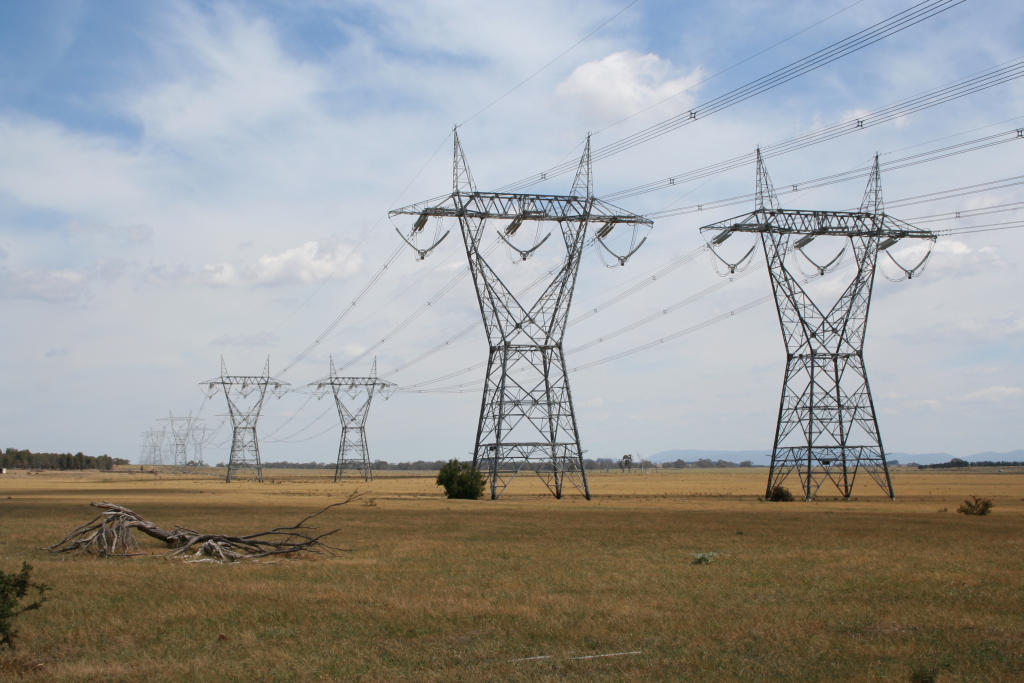
The framework requires large-scale data centres to be net generators of renewable energy, to underwrite new renewable supply, and to pay their full grid-connection costs. At the 28 July Ministerial Council six jurisdictions backed it; Queensland and the Northern Territory opposed, with the NT promoting a gas-backed 2 GW data-centre precinct at Beetaloo. Bowen flagged federal powers over energy market operators to block fossil-fuelled data centres in states that hold out. Legislation is expected in early 2027.
The month the floor gets set
Where the 6 gigawatts wants to be built
The adoption link. EY analysis published Thursday puts AI's upside for Australia at up to 2.4% productivity, $116bn of GDP and 44,000 jobs over a decade — with EY chief economist Cherelle Murphy tying it directly to the rulebook: "Once you've got those rules around AI, then you're going to give users more confidence to use the technology."
Why it matters here. If AI compute or colocation capacity is in your 2027 plan, the state you build or buy in now determines which rulebook applies — and the federal floor gets set this month.
The second Big Four bank moves on agents — this time facing customers.
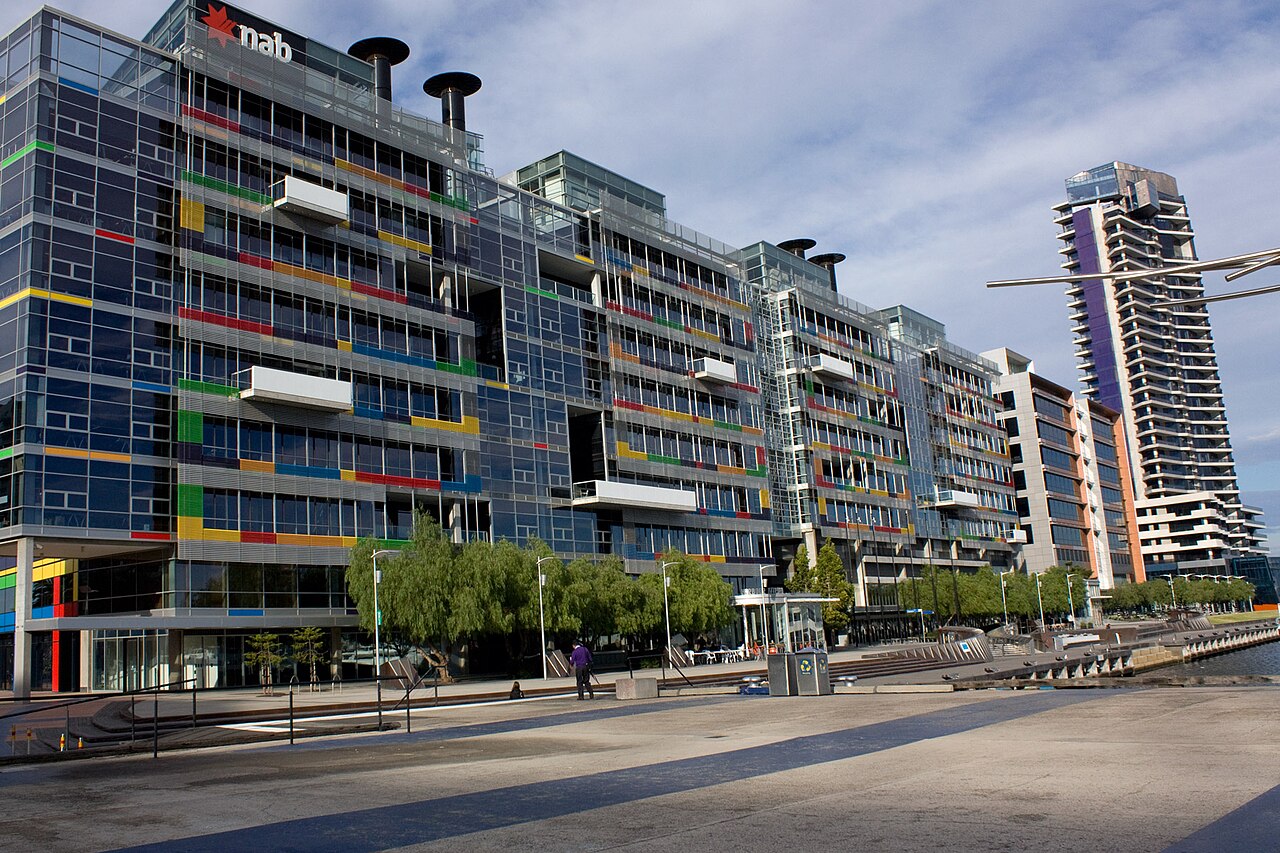
NAB will pilot an agentic AI platform over the next 12 months, initially in lending, with AI agents interacting with staff and bank systems on customers' behalf — the first Big Four commitment to customer-facing agents.
NAB says it will use US-made models, citing US developers' cyber and copyright standards — a procurement signal in its own right. Westpac's five agents (last issue) work inside the bank's own credit processing; NAB's are pointed outward, at customers. Both land inside the automated-decision-making transparency obligation commencing 10 December 2026 under APP 1 — OAIC guidance still not final (background, dated).
The consumer side arrived the same week. Amazon launched Alexa+ Early Access in Australia on Wednesday — its first market outside the US. Built on Bedrock, it holds conversational context, books restaurants, compares products, summarises reviews and monitors prices: free during Early Access, then free with Prime, A$29.99 a month without. The bot-policy question from last issue's Ninth Circuit item now has a named, at-scale counterparty in Australian living rooms.
Son doubles the OpenAI bet. Tokyo docks him 4% anyway.
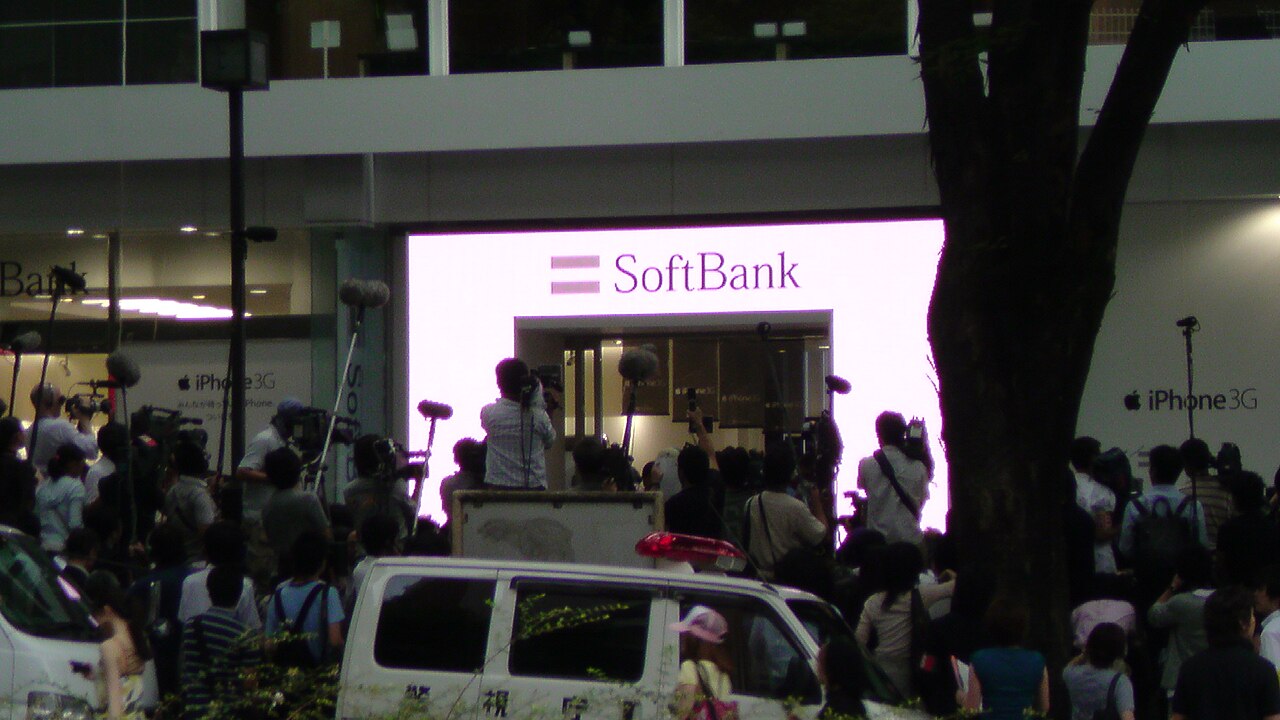
SoftBank's April–June result, out Wednesday: net profit ¥347.3bn (US$2.2bn), down 18% year on year but ahead of estimates — carried by a ¥1.33 trillion (~$8.2bn) fair-value gain on its Intel stake. The stock fell about 4% in Tokyo on the day.
The OpenAI position doubles by October
China — the price war is the story. DeepSeek's V4-Flash (released 31 July — dated) put a near-frontier, MIT-licensed model at $0.08 per million input tokens and $0.28 output — Axios calls it a ~99% discount to Claude Opus 4.8 equivalents. Bloomberg's 4 August analysis of the July release cascade (Kimi K3, Qwen3.8-Max, V4-Flash) describes a "death zone" for mid-tier US labs, and puts more than 30% of OpenRouter token traffic through Chinese open-weight models, up from 4.5% in H1 2025.
Chinese open weights, share of OpenRouter token traffic
Singapore — MAS's draft AI risk-management guidelines, which its July consultation materials extend to agentic systems, are due to finalise in Q4 2026 with a 12-month transition (background, dated). New Zealand — no policy news cleared the bar; The Spinoff's 5 August election-year audit notes only the Greens have an AI policy (including a one-year moratorium on new data-centre consents) and quotes academics urging an Office of AI modelled on Australia's. Japan, Korea, India, Taiwan: nothing else cleared the freshness bar this issue.
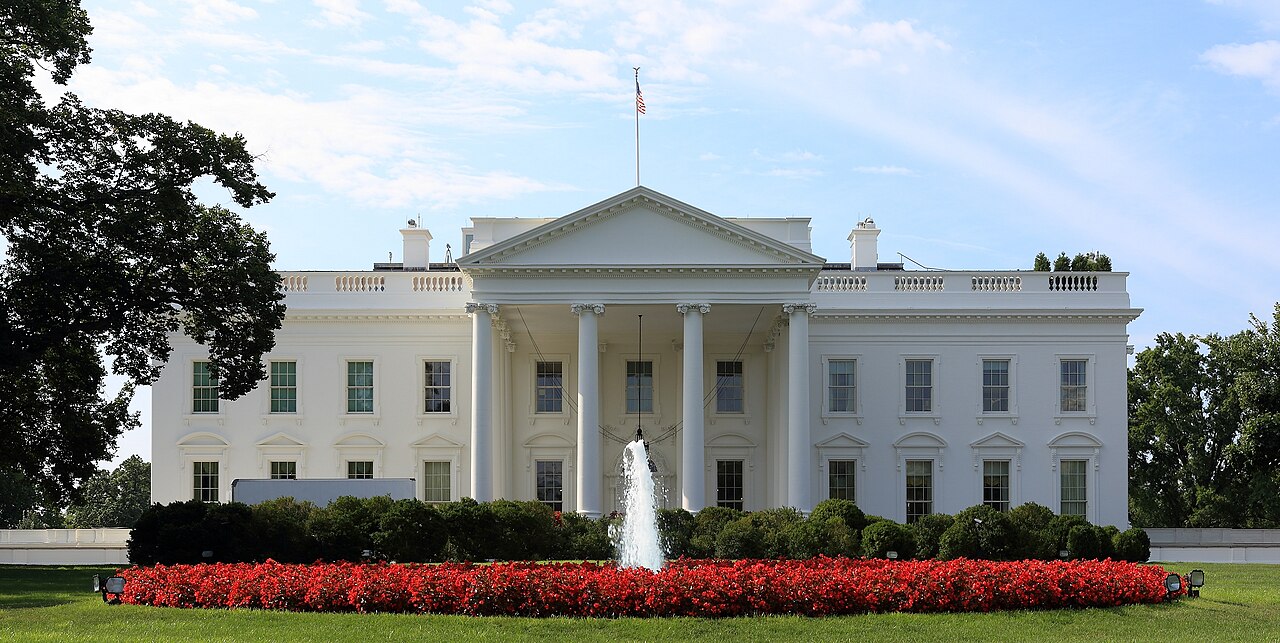
$100,000 a month buys milliseconds on the President's posts.
On 1 August, Trump Media & Technology Group switched on Truth API: machine-readable, low-latency delivery of Truth Social posts — including the President's. By Tuesday, at least five institutional clients had signed, per the WSJ: financial news organisations and high-frequency trading firms.
The pricing, as reported: $60,000–$100,000 a month for the ten top-trending accounts, up to $1.2 million a year for broader access. TMTG announced the service on 16 July (CNBC); the FT reported the $100,000-a-month pitch a day later. What is sold is latency — a feed an algorithm can act on before a push notification renders. The President is the platform's largest shareholder, through a trust controlled by Donald Trump Jr.
Three posts, three markets
The response, at equal weight. The SEC declined to comment. Renee Jones (Boston College, former SEC): if some people get special access, "that's misappropriated information." Virginia Canter (Democracy Defenders Fund): "a step toward normalizing insider trading." Warren and Schiff wrote to SEC Chair Atkins on 28 July calling the product an abuse of office; Raskin has demanded records by 13 August. TMTG's answer: posts are released "simultaneously to traders and the general public" — the product is delivery mechanics, not early content — and critics show "a lack of understanding between public and nonpublic information." Its first-ever earnings call, Monday 10 August US time, brings the first hard revenue number.
The Australian read. Could an ASIC-regulated desk buy it? On the orthodox reading of s1042C of the Corporations Act, information published to the platform is "generally available" once it is readily observable — and paying for faster receipt of public information is the same legal shape as exchange co-location, which is permitted today. What no court has tested is that definition at millisecond scale: whether a post is "readily observable" during the interval only paid subscribers can machine-read it. And the desk consuming the feed algorithmically already sits inside ASIC's automated order processing rules (Market Integrity Rules Pt 5.6, RG 241), with CP 386's proposed algo lifecycle rules and mandatory kill switches still pending — ASIC notes ~85% of securities turnover is algorithmic. REP 798's warning that AI governance lags AI adoption was about exactly this class of decision.
Also this week: Trump administration advisers told AI firms the forthcoming federal safety-testing framework will exempt open-weight models, including Chinese ones (Bloomberg, 5 Aug). If Washington won't test them, due diligence on open-weight deployments lands entirely on the deployer — and its insurers.

A 93% growth quarter buys +29%. A reshuffle costs 4%.
Palantir's Q2: revenue US$1.94bn, up 93% year on year; US commercial up 149%; full-year guidance raised to US$8.15–8.16bn, about 82% growth. The stock rose 29% the next day — Bloomberg puts short sellers' hit at ~$3bn.
What the week's news was worth, by close
Why it matters here. Azure's AI story is heavily one customer deep, and concentration is now a fair procurement question in any multi-year Azure AI commitment. The Palantir print, meanwhile, is the number to quote when a board asks whether enterprise AI spend is real.
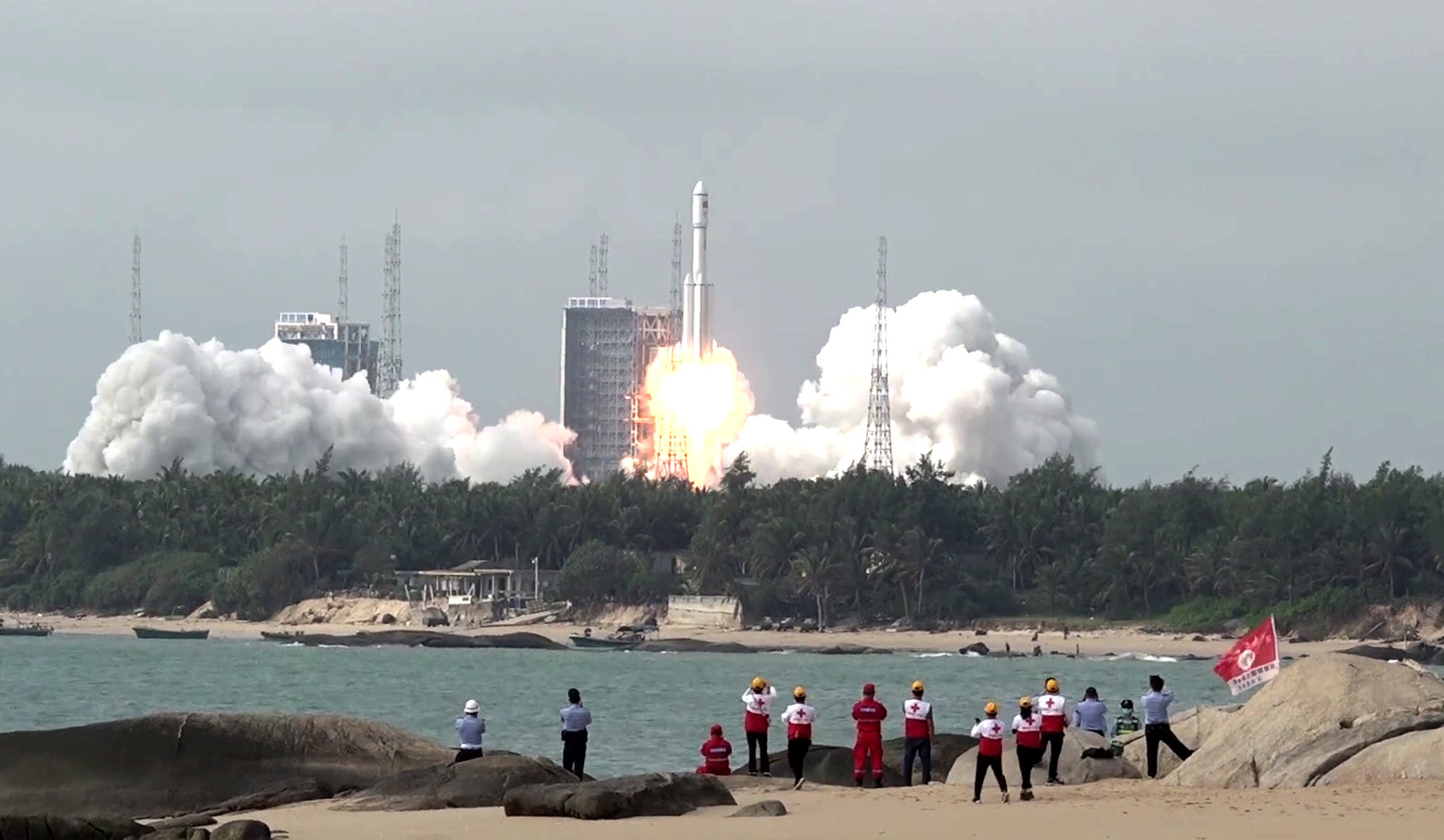
China caught a falling booster with hooks instead of legs.
On 10 July — a month ago; this runs for the economics, not as news — the first stage of a Long March 10B was recovered at sea by wire arrestment: pretensioned cables strung across the recovery ship Linghangzhe, engaged by metal hooks on the descending stage. No landing legs.
Built by the China Academy of Launch Vehicle Technology, it was reported as the first wire-arrestment recovery of an orbital-class stage, and China's first full recovery profile — controlled return, vertical descent, intact retrieval. Project manager Wang Wei said the booster "was expected to be reused before the end of this year." As at 6 August it has not reflown; the stage is at CALT's Tianjin facility for inspection.
The economics. Recovery hardware that flies is payload not sold. Legs strong enough to catch a booster travel to the edge of space and back on every flight; hooks that engage cables on a ship move most of that mass off the vehicle and onto the vessel. Neither SpaceX nor CALT publishes leg or hook masses — a two-tonne figure widely repeated for Falcon 9's legs could not be verified, so it isn't printed here. The mechanism argument stands on its own: every kilogram of recovery gear removed from the stage is a kilogram sold to a customer instead.
Also in the cost column: Anthropic is assembling an in-house silicon team for Claude inference chips — semiconductor roles advertised at US$320,000–485,000, a multi-chip strategy rather than an Nvidia replacement (TechCrunch / Quartz, 5 Aug). Every frontier lab going vertical on inference silicon points the same direction for token prices over two to three years: down. Build-versus-buy models that assume today's prices are already stale.
The agent gets a wallet. The wallet gets a leash.
Cloudflare announced Wallets on Tuesday: humans fund an Account Wallet; agents get Virtual Wallets on API keys with owner-set spending caps, approved-merchant lists and per-agent transaction limits, plus human-readable cloudflare.pay identities bound to cryptographic key pairs, native to its x402 micropayments gateway. Handle reservations opened 5 August; full launch in the coming months.
Why it matters here. Agent spend controls are landing at the infrastructure layer before Australian banks have shipped agent controls of their own. Merchants and SaaS sellers should expect machine customers with hard budget caps — and price, rate-limit and write terms for them deliberately, per last issue's Ninth Circuit item (background).
Meta joined the coding-agent race. Muse Code, launched Wednesday: a terminal agent on Meta's Muse Spark models that plans changes, writes code, validates results and fans out to parallel sub-agents in isolated worktrees — positioned against OpenAI's Codex and Anthropic's Claude Code with cost as the wedge. Reports of a cut-price data-for-training tier carry conflicting prices, so none is printed here.
The swarm, in the operator's own chronology
"When a measure becomes a target, it ceases to be a good measure."
The floor gets set this month. If AI compute, data-centre capacity or a colocation contract is in your 2027 plan, establish now where it physically runs and what powers it. Put a standards-compliance clause in any capacity agreement you sign this quarter — and if the site is in Queensland or the NT, price the federal–state divergence as a live risk, because the state you build in determines which rulebook applies.