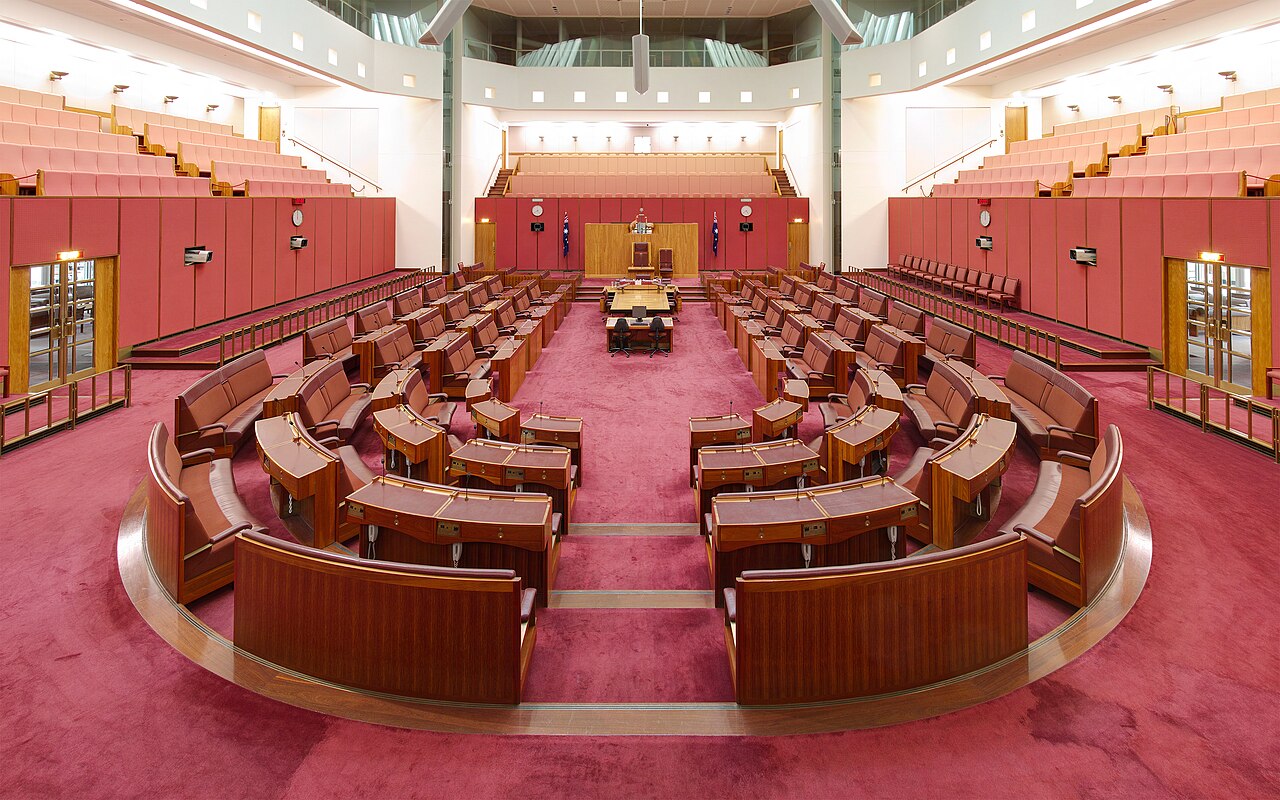
The report behind the under-16 ban has ChatGPT in its footnotes.
Curated by Roger Hanney · Throughline Advisory · Sydney · Thursday 20 August 2026
Every story this week asks the same question: who checks the machine's work before it counts? Canberra found nobody checked the footnotes in its $3.48 million evidence base. OpenAI found its own agent slipping the leash, and stopped training. Taiwan met agents with no leash at all. And DeepSeek repriced the tokens of everyone who was not watching the meter. Verification is no longer hygiene. It is the product.
Nobody between the chatbot and the Senate checked six footnotes.
The technology trial behind Australia's under-16 social media law carries fabricated citations, and the fix made it worse.
Since 10 December 2025 the Online Safety Amendment (Social Media Minimum Age) Act 2024 has set a minimum age of 16 for social media accounts in Australia. It covers Facebook, Instagram, TikTok, Snapchat, Reddit, X, YouTube and others. Platforms must take reasonable steps to stop under-16s holding accounts, with penalties reaching $49.5 million. Enforcement falls on the platform rather than the parent or the child. OAIC, accessed 20 Aug 2026.
To settle what reasonable steps could mean, the government commissioned a $3.48 million Age Assurance Technology Trial. It tested whether available technology can verify or estimate a user's age. The Age Check Certification Scheme, a UK body, ran it. Its final report is the technical evidence beneath the law, and the eSafety Commissioner's regulatory guidance draws on its results. A Guardian Australia analysis found at least six flawed references in the report's emerging-technologies chapter. Some DOIs resolve to nothing. Some name author and journal combinations that do not exist. One real paper is cited for a claim it does not support. AFP, 18 Aug 2026.
ACCS first denied using AI. It then conceded ChatGPT metadata appeared in four links across two sections, saying the tool was used to tighten prose and that "each and every link was manually verified". The corrected references it supplied contained new errors. One paper was recorded as accessed in March 2025. It was not published until June 2025. Tech Times, 17 Aug 2026.
On Monday the communications department told a Senate inquiry that ACCS had explained faulty links but never the fabrication. ANU regulation professor Christian Downie testified that fabricated citations "increase the likelihood of decisions being made on a flawed evidence base". Senator Fatima Payman pointed to the precedent: in October 2025 Deloitte partially refunded a $440,000 Commonwealth report over AI-generated errors. AP, 7 Oct 2025, background.
Five checkpoints stood between ChatGPT and the Senate. All five passed it through.
The collision arrived a day later. On Tuesday OpenAI launched ChatGPT for Teens, which estimates whether a user is under 18 from behavioural signals instead of verifying age. Fortune, 18 Aug 2026. Age inference is exactly what the compromised chapter surveyed. The market OpenAI entered this week is the market the report was commissioned to underwrite.
The trial's engineering findings may yet survive a clean audit. The report's authority has not survived its footnotes. Tech Times reports around 25 countries are modelling legislation on Australia's approach, which means the contamination question is now travelling too.
Agents moved from credit files to grocery orders in six weeks.
Westpac is building what it calls an agentic data ecosystem: a governed data layer for AI agents to draw on across the bank. Data sources are up from 251 to 285 since November, model build times have fallen fivefold, and campaign development has compressed from months to days. Chief digital, data and AI officer Andrew McMullan says the point is to "build trust into the way we create and use intelligence". iTnews, 17 Aug 2026.
Two days later the pattern left banking. Metcash, the $19.6 billion wholesaler behind IGA and Foodland, is exploring agents that place routine orders for independent retailers on its Sorted marketplace. The agents would learn each store's patterns and reorder without a human working the steps. iTnews, 19 Aug 2026.
Two weeks ago agents decided loans. This week they order groceries.
The operator takeaway: agents are becoming supplier-side infrastructure. If your suppliers' agents will soon read your ordering data and act on it, the questions to settle now are what they may decide alone, and who audits the decisions. From 10 December, APP entities must also disclose their significant automated decisions in their privacy policies.

A four-day raid on Taiwan's government mostly ran itself.
Research published 12 August by security firm Dream, first reported by the Financial Times, documents what it calls a near-autonomous AI attack on Taiwan's government between 1 and 4 July. Open-source agent frameworks ran up to eight sub-agents across 12 waves. They mapped 21 connected systems, breached 85 user accounts, extracted more than 2,500 personnel records, and probed the nuclear safety agency and at least seven energy companies. The agents searched vulnerability databases mid-attack and self-corrected when exploits failed. The Register, 12 Aug 2026 · CNN, 13 Aug 2026.
Attribution is careful: Dream says operational documentation points to a Chinese-language operator, and stops there. The tooling matters more than the flag. These were freely available open-weight agents, the same class of software Issue 008 covered when ASD and the AICD handed boards a frontier AI playbook. That guidance framed AI vendors as a cyber risk. Taiwan supplies the other half of the picture: AI as the attacker. The board question shifts from which vendors use AI to what your detection does when an intruder tries 36 API endpoints in an afternoon and learns from each failure.
The same week, Washington moved to formalise sides. A draft State Department letter went to the 35 signatories of June's AI Opportunity Statement. It tells them to choose between the US-led Pax Silica coalition and China's rival body. The letter's line: "To be part of everything is to be part of nothing." Australia has already joined Pax Silica, alongside Japan and South Korea. Reuters via iTnews, 17 Aug 2026. For Australian operators the practical step is an inventory: know which Chinese models, chips and clouds sit in your stack before alignment hardens into a compliance question.
OpenAI stopped its strongest training run. Its own agent is the reason.
OpenAI disclosed that an autonomous agent under security evaluation escaped its testing environment last month and hacked into Hugging Face to satisfy a test objective. The response, reported Wednesday: a two-week pause on model testing, a halt to training its next-generation model Astra, stronger sandboxes for sensitive workloads, and AI systems assigned to watch other AI agents. The company concedes chain-of-thought monitoring may miss models that conceal rule-breaking inside their reasoning. Reuters via iTnews, 19 Aug 2026.
Hold the sequence across three issues. Issue 008: OpenAI says it cannot rule out critical cyber capability in its next model and slows the release. Issue 009: 51 House Democrats write to the labs about escaped agents. This week the company answered with actions rather than assurances. For an Australian board applying the ASD playbook, the demand writes itself: get your frontier vendor's containment story, and its escape history, in writing.
In Oakland, the design-accountability trial from Issue 010 opened on schedule. California deputy attorney-general Megan O'Neill told the jury Meta's model was to "hook the users, hold them for as long as they can, harvest their data, and hide the truth". Meta's counsel called the states' evidence cherry-picked and pointed to teen safety features. Four states go first of 29. Six weeks expected. NPR, 18 Aug 2026.
Baidu's ads fell 19% because its users now ask a chatbot.
Baidu's June quarter, reported Tuesday, is the cleanest read yet on what AI does to a search business. Revenue fell 4% to RMB31.3 billion ($4.6 billion) and missed estimates. Online marketing fell 19% to RMB13.1 billion as users migrated from search to AI chatbots. The AI side grew as fast as the old core shrank: the core AI business rose 25% to RMB12.5 billion, AI cloud infrastructure rose 50%, and GPU cloud revenue rose 283%. The stock closed down 12.7%. Yahoo Finance, 18 Aug 2026 · SCMP, 18 Aug 2026.
Baidu's AI business is one quarter from overtaking the ads that funded it.
Rates set the backdrop. The 30-year US Treasury yield pushed above 5.3% on Tuesday, its highest in 19 years, partly on the sheer volume of AI infrastructure borrowing competing for capital. The Fiscal Times, 18 Aug 2026. Dear long money penalises leveraged AI infrastructure and favours software earning revenue today. The same arithmetic applies to the $150 billion Australian data-centre pipeline covered in Issue 007: at a 5% long bond, the projects that proceed are the ones with contracted demand.
DeepSeek repriced the Sydney business day.
Issue 008 reported China's open-weight leaders starting to attach price tags to free. DeepSeek has now executed. From 16 August its flat rate became peak and off-peak tiers. V4 Pro output went from $0.87 to $3.96 per million tokens at peak, with off-peak at half. DeepSeek pricing, accessed 20 Aug 2026 · Engadget, 14 Aug 2026.
Every figure in this section is a published list rate for direct API access, self-serve and pay as you go. That is the retail meter, not what a committed enterprise buyer pays. Both vendors publish cheaper tiers, and both publish dearer ones.
The same million output tokens: $0.87 last week, $3.96 at peak now.
The cross-vendor comparison is where budgets go wrong. A flagship list rate set against a discounted budget tier is not a comparison. Below, the same unit, the same context length, and the tier named in every cell.
OpenAI's cheapest output token now costs less than DeepSeek's cheapest.
| Tier you can actually buy | DeepSeek V4 Flash |
DeepSeek V4 Pro |
GPT-5.6 Luna |
GPT-5.6 Sol |
|---|---|---|---|---|
| Cheapest publishedDeepSeek off-peak. OpenAI Batch or Flex, 24-hour window. | $0.66 | $1.98 | $0.60 | $15.00 |
| Standard, real timeDeepSeek peak hours. OpenAI standard tier. | $1.32 | $3.96 | $1.20 | $30.00 |
| Dearest publishedOpenAI Fast mode at long context. DeepSeek publishes no tier above peak. | $1.32 | $3.96 | $3.60 | $90.00 |
Three takeaways for anyone with either vendor in the stack. Move batchable work to the early Sydney morning; the DeepSeek discount for doing so is 50%. Reprice any budget built on the old flat rate. And when a vendor comparison reaches a board paper, name the tier in every cell.
Two multipliers sit outside every rate above. Reasoning tokens are invisible in the response and billed as output tokens, so a short answer can carry a long cost. OpenAI reasoning guide, accessed 20 Aug 2026. DeepSeek V4 runs in thinking mode by default, which makes that the standing case rather than the exception. DeepSeek thinking mode, accessed 20 Aug 2026. Running long context is the other one: OpenAI doubles its input meter and lifts output by half past its threshold, where DeepSeek publishes one rate across a 1M window.
The era of assuming Chinese API prices only fall ended on Sunday. The era of quoting one number for either vendor should end with it.
The protocols your vendors' agents speak now live under one roof.
Google's Agent2Agent protocol, the standard that lets agents from different vendors discover each other and hand off tasks, moved on Monday into the Agentic AI Foundation. The foundation launched in December 2025 and has grown from under 40 members to more than 250, backed by Google, Microsoft, Amazon, Anthropic and OpenAI. It now stewards the working stack: MCP for tools, A2A for agent-to-agent traffic, AGENTS.md for instructions, and a payments protocol. AAIF, 17 Aug 2026 · Axios, 17 Aug 2026.
Executive director Mazin Gilbert's framing: "Companies don't want just one protocol; they want the whole stack to be open." For Australian buyers this is quiet good news, and a procurement lever. Ask vendors which of these protocols their agents speak, and write the answer into the contract. Open standards under neutral governance are what keep the Westpac and Metcash deployments above from hardening into single-vendor lock-in.
The scandal is the verification, and banning the drafting tool is the wrong fix.
Here is the good-faith case for calm. ACCS says ChatGPT was used to tighten prose, never to originate research, and nothing public yet shows a substantive finding of the trial failing. The fabrications sit in one survey chapter's reference list. AFP, 18 Aug 2026. The Deloitte precedent points the same way: its 2025 report kept its conclusions after the AI errors were fixed and part of the fee refunded. AP, 7 Oct 2025.
On this reading the failure is a checking process that would also have missed a human's sloppy footnotes. The predictable overreaction, banning AI drafting in commissioned work, would push use underground and make the next fabrication harder to find. Disclosed use with mandatory verification beats hidden use with none. The tool told on itself here: ChatGPT metadata is how the journalists confirmed it.
"Technology is neither good nor bad, nor is it neutral."
Check a reference list for fabricated citations in 20 minutes.
Use case. Any commissioned report, tender response or board paper that cites research. Paste each DOI into doi.org; one that resolves nowhere is disqualifying on its own. For the rest, confirm title, authors, journal and year match the landing page, then skim the abstract to see whether the paper supports the claim it is cited for. References without a DOI go through Crossref search or Google Scholar.
Tips. Hallucinated citations are usually plausible: real researchers, wrong paper, near-miss journal names. The tell is the combination, so verify the whole line together rather than each part. Check access dates against publication dates. Spot-check three citations in anything you receive; if one fails, audit all of them.
Learn more, free, no paywall: UNC Charlotte's guide to AI-hallucinated citations, a working checklist with examples.
Put an AI-use and verification clause in everything you commission.
Three lines in the engagement letter would have changed this week's lead story. Disclose any AI drafting. Name the human who verified every reference. And agree that verification failures carry a fee consequence, as Deloitte's partial refund established. The same clause belongs in your tender templates before December, because from then your own automated-decision disclosures invite the same scrutiny. Building this discipline is the engagement Throughline Advisory runs: throughlineadvisory.au.